The listing won't tell you what matters most
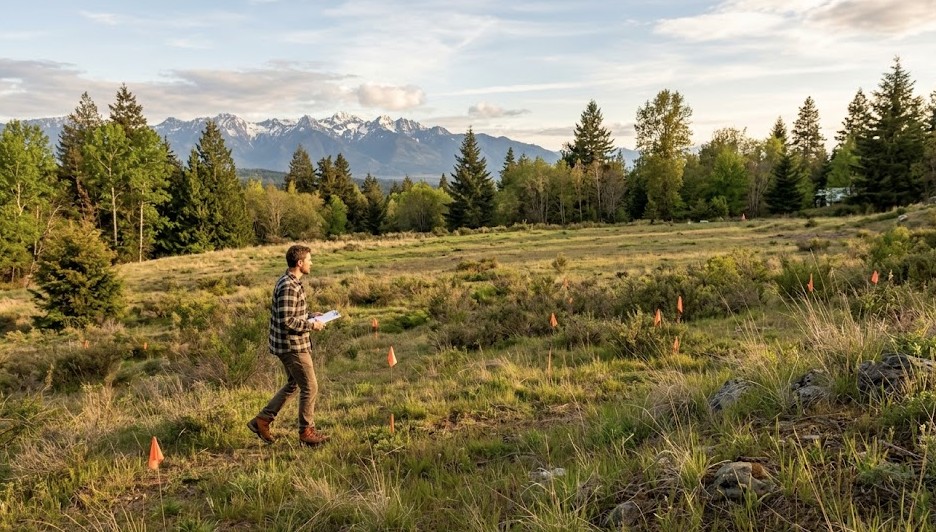
Real estate listings are good at showing you acreage, views, and price per square foot. They're terrible at telling you whether you can actually build.
A listing in Snohomish County might say “ready to build” when the parcel hasn't had a perc test, has no confirmed access to power, and sits partially inside a wetland buffer. The seller may not even know. The agent may not have checked.
If you're buying land in Washington with the intent to build a home, you need to verify buildability yourself. Not assume it. Not trust the listing copy. Verify it.
Here's how.
Step one: check the zoning before anything else
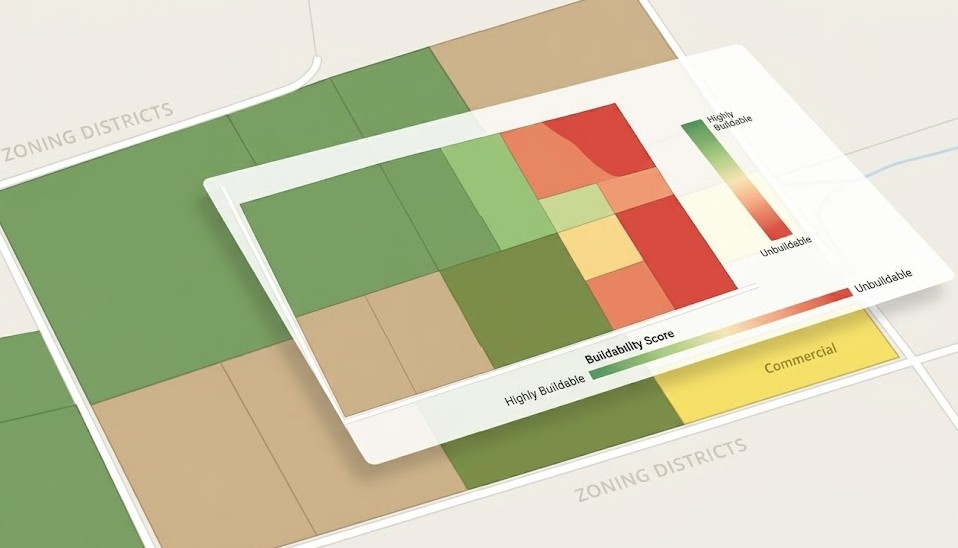
Every county in Washington maintains zoning maps. Before you drive out to look at a parcel, pull up the county's GIS system and confirm the zoning designation.
You're looking for two things. First, is residential construction permitted? Some parcels are zoned agricultural, forestry, or commercial, and residential may not be an allowed use. Second, what are the specific dimensional standards? Minimum lot size, maximum building height, setback distances from all property lines, and lot coverage limits.
In King County, you might find a lot zoned RA-5, meaning Rural Area with a five-acre minimum. In Pierce County, you could see R-10 for ten-unit-per-acre residential. Each zoning code has different rules.
Don't skip this step. Everything else depends on it. If zoning makes the parcel unworkable for your plans, you've saved yourself from costly mistakes when buying land before spending another dollar on due diligence.
Step two: find out about septic or sewer
If the parcel isn't within a sewer service area, you'll need an on-site septic system. This is where more deals fall apart than almost anywhere else in Washington land purchases.
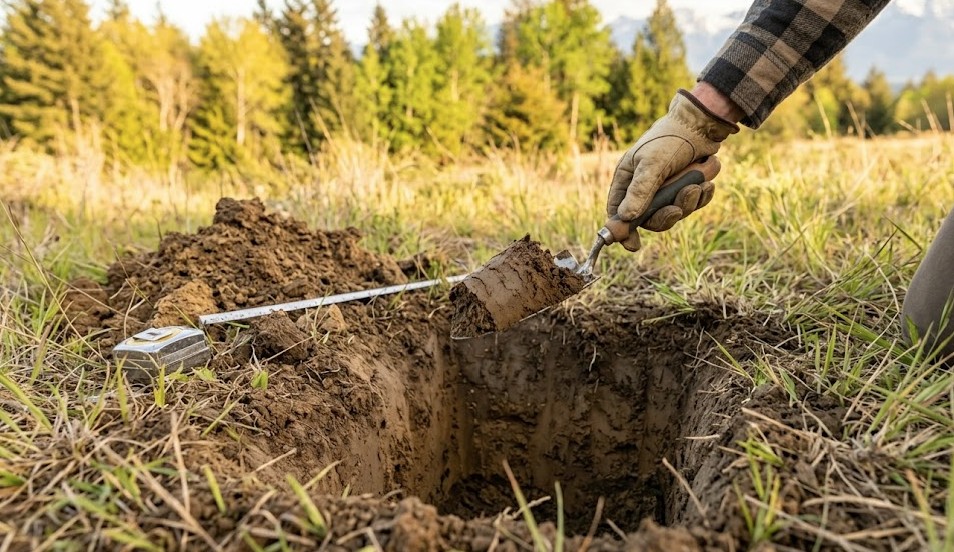
Septic design depends on soil conditions, groundwater depth, lot size, and distance from water bodies. A failed perc test or insufficient drain field space can make a property unbuildable unless an expensive engineered system is possible.
Ask the seller if a perc test or septic design has been done. If not, request one as a condition of sale, or budget for it in your due diligence. In areas like rural Thurston County or parts of Kitsap County, septic services and verification is the single biggest variable.
A perc test tells you how fast water drains through the soil. But a perc test alone doesn't mean you can install a septic system. You also need a septic designer to confirm that a compliant system fits on the lot with proper setbacks from wells, property lines, and water features.
Don't confuse a passing perc test with full septic approval.
Step three: verify utility access and what it costs
Electricity, water, and internet access are not guaranteed on vacant land. Some listings are honest about this. Many aren't.
Contact the local utility provider and ask: Is there an existing connection? If not, how far is the nearest line, and what's the estimated extension cost?
Running power to a rural parcel in eastern Washington or the San Juan Islands can cost $20,000 to $80,000 or more depending on distance and terrain. Well drilling costs in Washington range widely depending on depth and geology.
These numbers change your budget. Get them early.
Step four: check for environmental constraints
Washington has strong environmental protections. That's a good thing for the landscape, but it means you have to know what you're working with.
Critical areas include wetlands, streams, steep slopes (typically 15% grade or more), fish and wildlife habitat conservation areas, and frequently flooded areas. Each of these can trigger buffer requirements that reduce your buildable footprint.
A parcel along a creek in Clark County might lose 50 to 100 feet of buildable depth on the creek side. A lot near a wetland in Snohomish County could require a delineation study before any permit application is accepted.
Your county's critical areas maps are a starting point. But field verification matters. Maps can be outdated or imprecise. That's why environmental reviews matter before you commit to a purchase. Understanding what makes a property unbuildable in Washington can save you from a costly surprise.
Step five: understand the access situation
You need legal access to the property. That means either public road frontage or a recorded easement that grants you the right to cross someone else's land.
Some parcels in Washington are landlocked. The previous owner may have had an informal arrangement with a neighbor, but informal isn't legal. Without legal access, the county won't issue a building permit.
Also check road standards. Even if you have access, the road may not meet county standards for emergency vehicle access, which can block permitting in some jurisdictions. Land surveys can confirm boundary lines and easement locations.
If a parcel's access runs through a shared driveway or private road, get the easement documents and read them carefully. Some easements restrict what kind of construction traffic is allowed, or they expire. A title company can help confirm access rights before you close.
Step six: assess slope, soil, and drainage
Washington's landscape includes everything from flat prairie in the Palouse to steep hillsides in the Cascades foothills. The slope of your lot directly affects construction costs, foundation design, and permitting requirements.
Slopes over 15% often trigger geotechnical study requirements. Slopes over 30% may be restricted from development entirely under critical area ordinances.
Soil type affects both septic design and foundation engineering. Sandy soil drains fast but may not support certain foundation types. Clay soil holds water and can cause drainage problems.
If you're looking at a hillside lot near Bellingham, Tacoma, or along the Columbia River gorge, assume slope analysis will be part of your due diligence.
Why a buildability check isn't the same as an inspection
A home inspection evaluates an existing structure. A buildability assessment evaluates raw land.
They serve completely different purposes. A buildability review looks at zoning, environmental constraints, septic viability, utility access, slope, drainage, and access rights. There's no structure to inspect. You're evaluating potential.
Many buyers skip this step because they've been conditioned to think of inspections as something you do after there's a building. On raw land, the feasibility assessment is your inspection.
The fastest path to a real answer
You can do some of this research on your own. County GIS maps, zoning codes, and utility provider websites give you a starting point.
But for a full picture, you need someone who knows how to read site conditions, coordinate with agencies, and evaluate everything together. That's what MKG Construction's feasibility studies do.
We look at your parcel from every angle: zoning, septic, access, utilities, environmental constraints, slope, and drainage. Then we give you a clear answer about what's possible and what's not — before you spend money on design or permits. Our approach to permitting and coordination follows the same principle: transparent pricing, milestone-based payments, no surprises.
Thinking about buying land in Washington? Don't close until you know what you're buying. MKG Construction's feasibility studies evaluate buildability so you're making decisions based on facts, not assumptions. Transparent pricing. Milestone-based payments. No surprises.
Book your consultation